Photo and Commentary ©2026 by Robert Howson
Tuesday, May 19, 2026
Think back to a time when air travel was different than today. Maybe you can remember when we got dressed up to take a flight. Somehow suit and tie seemed necessary to board an airplane. And it seemed almost necessary to complain about airline food, but at least there was food back then. Now, we’re lucky if we get pretzels (and of course no peanuts due to severe allergies). Yes, things have change. Still, some things have fortunately remained the same. We still have confidence that the pilot and navigator will get us to our desired destination.
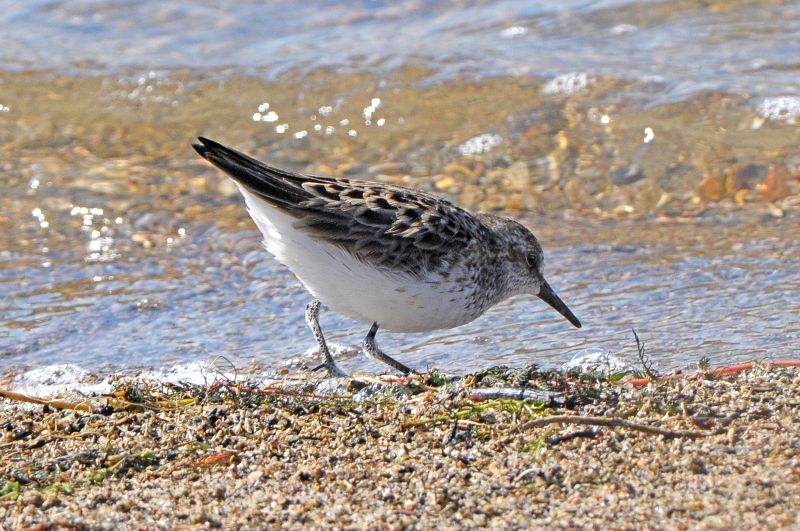
Long before we were traveling to Grandmother’s house by air, birds were taking extended flights to places many of us have yet to visit. One of those that makes the longest migrations of any North American bird is the White-rumped Sandpiper. It nests in Arctic Canada and winters in the southern portion of South America. Its fall migration takes it over the Atlantic Ocean, where its flight gradually moves southeastward to take it along the coast before crossing the Amazon basin. This extended flight takes about a month to complete. In spring its flight north follows a similar pattern except it does so more quickly employing a fast series of long flights. One of these can be as long as 2,600 miles without stopping! Perhaps it is done this way to accommodate the short Arctic summer since its migration starts later than many species.
Long before humans employed this kind of travel and long distance journeys were done by sea, Henry Wadsworth Longfellow understood the importance of correct navigation to reach one’s destination. He used poetic words to transfer this temporal experience to the spiritual reality each of us must take. In this way he observed: “Morality without religion is only a kind of dead reckoning — an endeavor to find our place on a cloudy sea by measuring the distance we have run, but without any observation of the heavenly bodies.”