Photo and Commentary ©2026 by Robert Howson
Tuesday, March 24, 2026
Have you ever noticed how susceptible we humans are to being overly influenced by our first impressions? We can use the character Absalom to illustrate our point. This third son of King David was probably first introduced to us with stories of his long hair which ultimately led to his untimely death. Lost in the telling were more important character qualities which led to his unfortunate demise: his egocentric posture, his feigned use of flattery, his total lack of clemency, and his utter disrespect of his father. Instead, we tend to revert to the story centered on his long hair and the boughs of an oak tree.
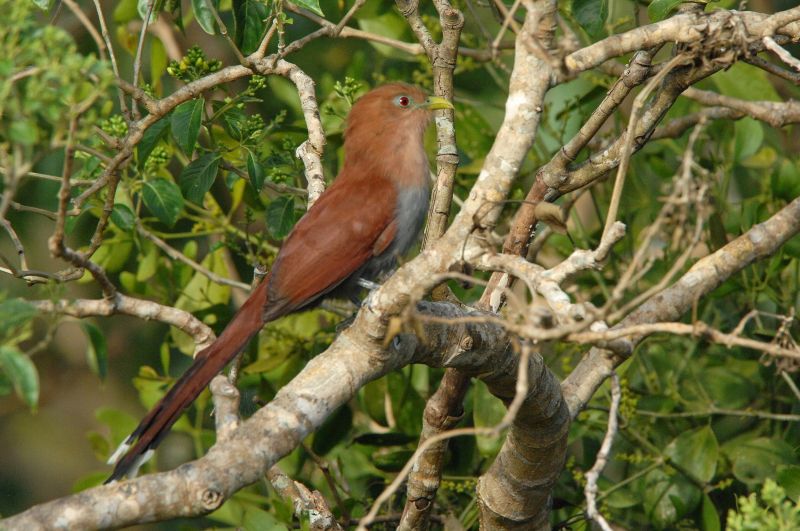
A similar scenario takes place in a large cuckoo found in the Neotropics. The Squirrel Cuckoo derives its common English name from its superficial resemblance to the Red Squirrel in both body color and its movements through the trees in search of food. This image is further enhanced by its extremely long tail, not unlike that of the squirrel’s. Of course, there is really no connection between the bird and the squirrel, only surface similarity. Their diets are not the same with the cuckoo consuming almost entirely animal material. Feathers and fur are relegated to the proper species; in other words, one is a bird, the other a rodent.
Eugene Peterson offers us a down-to-earth, common-sense translation of Proverbs 25:8. “Don’t jump to conclusions – there may be a perfectly good explanation for what you just saw.” (The Message) While those first impressions may be helpful, taking a second look is more likely to deliver sound judgement.