Photo and Commentary ©2026 by Robert Howson
Tuesday, June 16, 2026
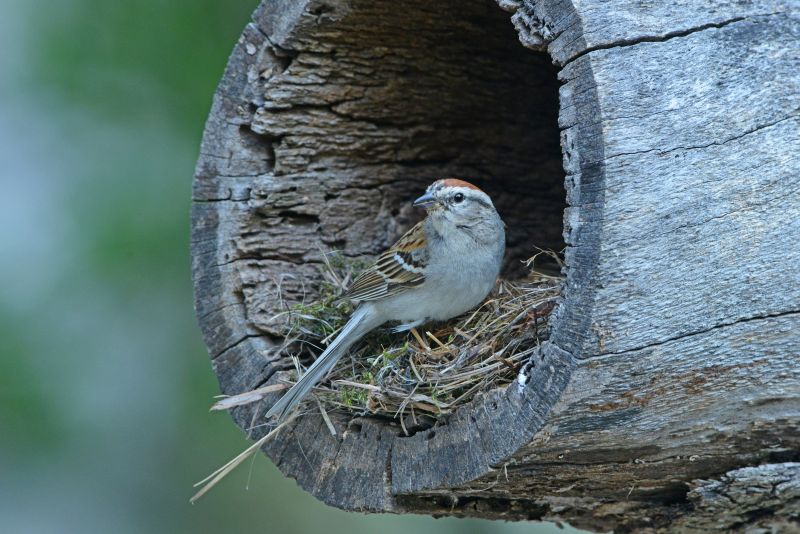
Words have a way of taking on different shades of meaning when used in different contexts. Take for example this picture of a Chipping Sparrow, framed by an old log hollowed out by the passage of time. The portrait of the sparrow is acceptable, if not special, but it offers greater visual impact when it is outlined by the log. When we hang pictures on the wall, we frame them for the exact same reason, to showcase and accentuate them.
Try looking at the same word in another context. We’ll focus on Hebrews 11:3 for this example: “By faith we understand that the worlds have been framed by the word of God, so that what is seen hath not been made out of things which appear.” (ASV) In this setting we understand that “framed” means made, just as when a carpenter frames up a house, he is building the basic structural makings of the building.
Just for fun, let’s try looking at this same verse but using the interpretation of “framed” as it was used in the first example. We’ll also take the liberty to morph the phrase “word of God” to mean the Bible, or His word. It’s a stretch, but perhaps not too far. With this construct we could paraphrase the verse to read this way: “By faith, when we read the book of nature, we can see God at work, just like when we read His words in the Bible.” I know, in so doing we’ve lost the original intent of the writer, but that doesn’t mean we haven’t found an insight worth considering. Blaise Pascal, in his work Pensées, written in 1669, expressed the same idea only with more finesse: “As nature is an image of grace, He has done in the bounties of nature what He would do in those of grace, in order that we might judge that He could make the invisible, since He made the visible excellently.”