Photo and Commentary ©2025 by Robert Howson
Tuesday, October 14, 2025
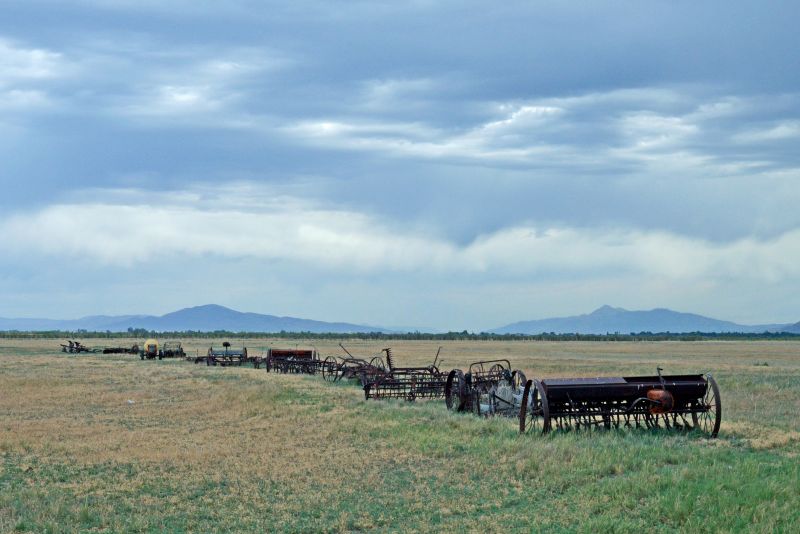
For some reason, people seem to like to put things in line to display them. And for some reason, also unknown, I like looking at their arrangement. An open field seems a logical place to display implements used in farming in the past. It also serves as a reminder that, at one time, these were the most innovative and advanced technological tools available to man. They increased his productivity and made the work easier.
But now they sit rusting in the field, obsolete and no longer of use. And probably that’s the way it should be. Progress demands change. However, that doesn’t mean the same tasks still do not need to be done. The soil must be plowed, seeds must be sown, and plants need proper nutrients and water before the produce is finally harvested.
Written during a time when an agrarian way of life was the norm, many of God’s promises and warnings are couched in terms familiar to those working the soil. The focal point of many of these discourses centered on harvest time which marked the climax of the year. It was then that success or failure was made evident. Sometimes a bad harvest was due to personal failure; failure to plant abundantly, or to watch over the crops. But Haggai presents a slightly different picture: “You have planted much, but harvested little. You eat, but never have enough. You drink, but never have your fill. You put on clothes, but are not warm. You earn wages, only to put them in a purse with holes in it.” (Haggai 1:6 NIV) He contends their failure was not due to laziness or little ambition, but due to misplaced priorities, of not putting God first in their lives. That’s advice that never goes out-of-date. Such advice should never be put out to pasture to collect rust and viewed as a relic of wisdom from the past. It’s more precise than the latest atomic clock, more trustworthy than yesterday’s harrow.