
Photo and Commentary ©2026 by Robert Howson
Tuesday, October 6, 2026
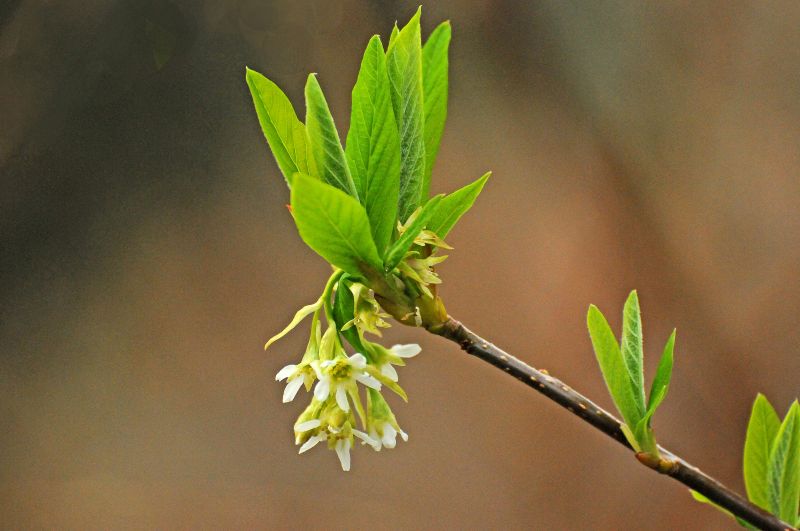
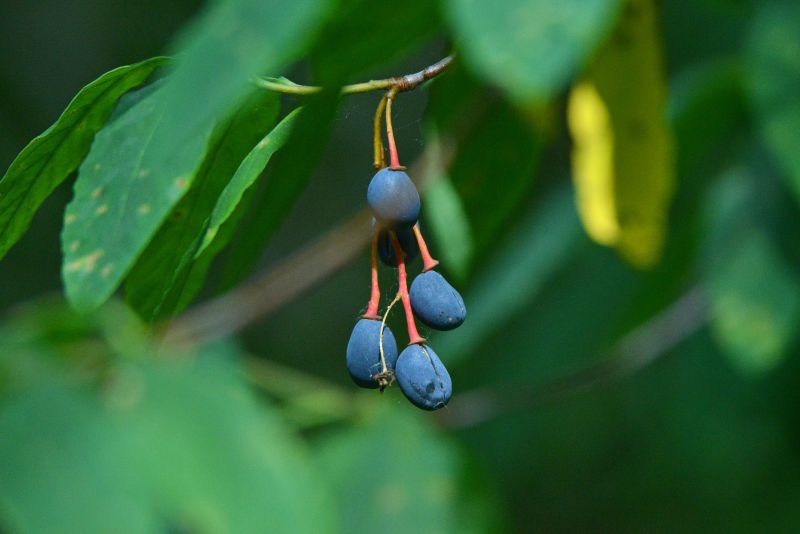
Like a Noble Savage in a James Fenimore Cooper novel who was able to vanish unseen into the woodwork, so too for me was the Indian Plum. Even from childhood I liked knowing the names of plants and animals I found in the woods, but somehow this small tree didn’t register in my thinking until much later in life. Even then I failed to make the connection between this shrub with drooping clusters of flowers that was among the earliest to bloom, and that same species which bore olive-sized fruit that started out pale orange before ripening into a bluish black. Maybe that’s because during the summer months it’s not nearly as distinctive as its spring and fall appearance, blending in well with willows and other growth in a variety of wooded settings.
It is known by a variety of names including Osoberry (because bears love them), Indian Peach, Squaw Plum, Skunkbush, and Bird Cherry. Native Americans ate the fruit fresh, dried, and cooked, even though it can have a bitter after-taste. Perhaps that keeps consumption limited, which may not be so bad since its leaves, seeds, and even the fruit may contain small quantities of hydrogen cyanide. Somehow or other, we have come up with the idea that if it tastes bad, it must be good for us. As a result, it has been used to treat tuberculosis, stomach aches, rheumatism, macular degeneration, as a laxative, and even to prevent cancer. Who knows if it really works or not, but it does contain decent amounts of vitamins C and K.
When people are hurting they will resort to almost any proffered solution in hopes that their actions will prove to be beneficial. Some of these are rational, others are not. But without hope, no one can prosper. Hope, itself, is a healing agent. However, Micah seems to have the best idea: “But as for me, I watch in hope for the LORD, I wait for God my Savior; my God will hear me.” (Micah 7:7 NIV)