Photo and Commentary ©2025 by Robert Howson
Tuesday, October 7, 2025
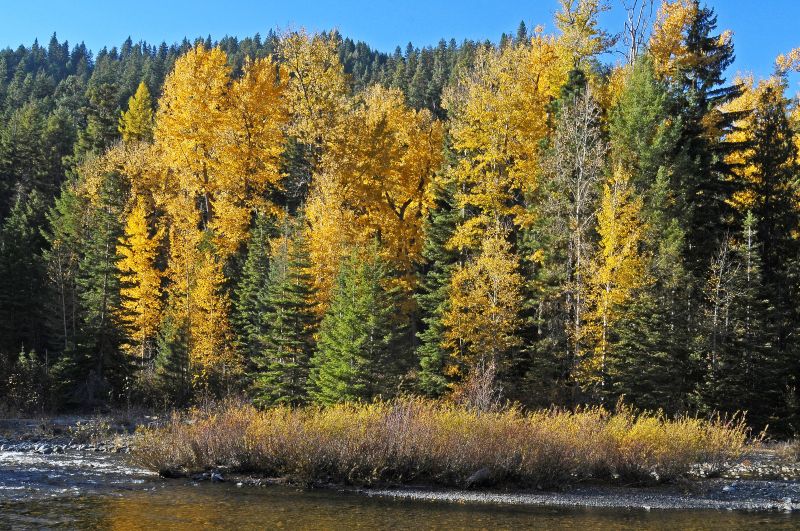
One of the blessings that comes from being in the eastern part of our state this time of year is the wealth of color displayed. Not only do the Black Cottonwood found along lowland streams and rivers display a brilliant yellow, but higher in the mountains the Western Larch extends this color to higher elevations along with a similar species, the Subalpine Larch. Larch belong to the pine family with the Douglas Fir probably being their closest relative.
What is unusual about the larches is that they are coniferous trees, but they are deciduous and not evergreens. This can be confusing since most conifers keep their needles or leaves year around, but the larch is an exception. In the fall, when temperatures grow colder and daylight gets shorter, the chlorophyll, which masks the other colors in the leaves, is drawn into the trees which results in the yellow being displayed. The term conifer and evergreen refer to different aspects of a plant. The term conifer relates to how the plant reproduces by way of cones, while evergreen refers to whether the plant loses or retains its leaves. We also have evergreens that aren’t conifers like the azaleas and boxwoods. Still, because of what we see most frequently, we tend to equate conifers with evergreens which is a mistake.
Unfortunately, we also run the danger of extending this same kind of thinking to other areas as well. This type of stereotyping may promote the thinking that all true believers will come to understand the Bible as we do before the Lord comes. All they have to do is “see the light.” While it’s good to have confidence in the Word, maybe we run into danger in having too much confidence in ourselves.