Photo and Commentary ©2025 by Robert Howson
Tuesday, September 30, 2025
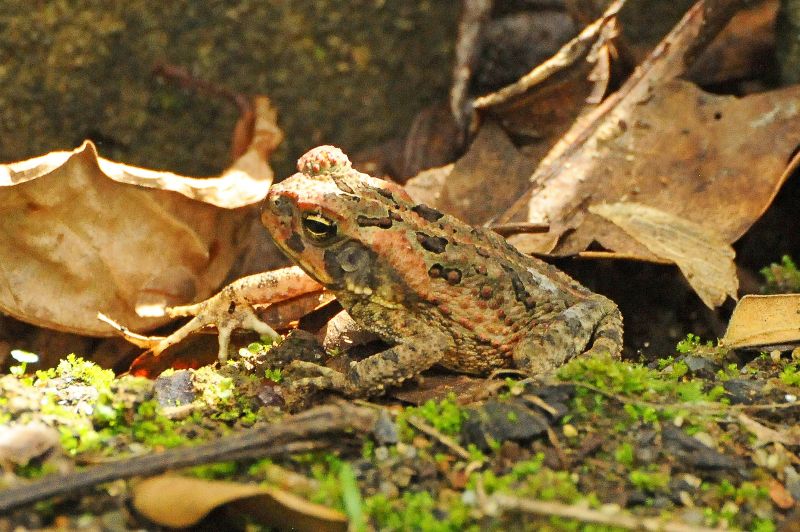
It would probably surprise no one that many things on this earth are a mixture of both good and bad; good in one setting and bad in another. We can use the Cane Toad to illustrate this. Also known as the Marine Toad and the Giant Toad, this amphibian is the largest toad in the world with some females reaching nearly 10 inches in length. Native to South and mainland Central America, its range extends northward to the southernmost part of Texas. Problems arise however, in areas where the toad has been introduced. In some of those areas their population density is 98-99% greater than what is found in their native state.
These toads have been introduced into many areas in the Pacific and Caribbean as a means of biological control of agricultural pests such as beetles that devastate the sugarcane plantations. In some instances this seems to have worked successfully, while in others it did not. The downside is that this invasive species can wreak havoc upon native animals. The reason for this is that the skin of the adult is toxic. In addition, the parotoid glands behind the eyes produce a poison known as bufotoxin which can even be deadly to humans who have eaten it. Dogs are especially vulnerable since they are prone to licking or biting the toads. Even the eggs and tadpoles contain this toxin.
The Cane Toad isn’t inherently bad, but there is no doubt that it can do serious damage when in the wrong place or used inappropriately. James speaks of our tongue in the same way. “We use the tongue to bless our Father, God, and we use the same tongue to curse our fellow-men, who are all created in God’s likeness. Blessing and curses come out of the same mouth—surely, my brothers, this is the sort of thing that never ought to happen!” (James 3:9-10 J.B. Phillips New Testament) Like so many other things in our lives, the tongue is neither good nor evil. The way we use these instruments determines their value.