
Photo and Commentary ©2025 by Robert Howson
Tuesday, July 1, 2025
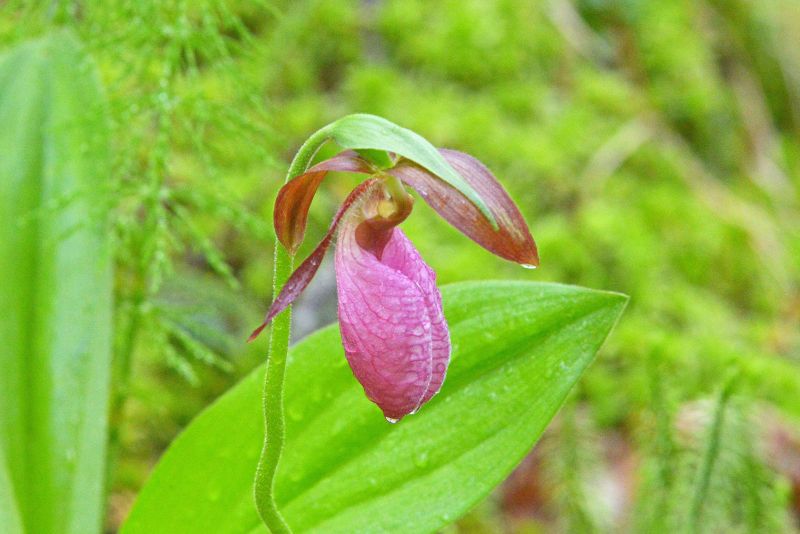
I’d never seen one before, but I knew instantly what it was. We had just rounded a bend on the boardwalk in Northern Minnesota when the first one came into view. The Pink Lady Slipper Cypripedium acaule has to be among the most beautiful of North America’s native orchids. Found growing in clusters in rich woodland soil or adjacent to bogs, these flowers do their best in filtered sunlight. Considered endangered in some areas or “of special concern” in others, these flowers have specific requirements, in part because they are slow to germinate and colonize. One of these constraints is the presence of a fungus in the soil which is needed to break open the seed and pass along needed food and nutrients in order for the plant to flourish.
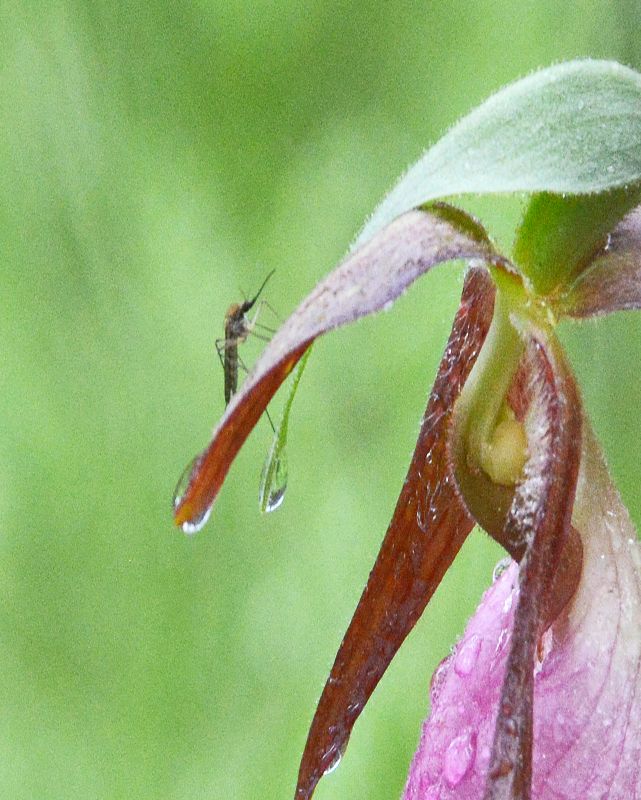
All of these conditions were present and the flowers were thriving. But so too were other accompanying factors as seen in the second photograph. It probably should not come as a shock to anyone that these orchids were not the only living thing that would thrive in such a damp environment. They were out in droves and seemed to be unfamiliar with the supposed effectiveness of DEET; a true overlap of the exquisite and the appalling. How could two such opposites find themselves compatible in the same setting?
Then I remembered the contrasts found in one of Christ’s most beloved parables, the story of the Prodigal Son. The story is full of disparities: the father’s generosity in contrast to his son’s selfishness; the son’s attitude when leaving compared to those upon his return; life in the pig sty and the finest robe; the father’s response to his returning son to that of the elder brother. These contrasts were intentional. Christ wanted His hearers to see and feel the disparity that begged for resolution. Maybe we learn best when these contrasts are made apparent to us. Maybe. But then again just maybe He wants us to long for the sublime without that accompanying buzz behind our left ear. May that day be soon.